Navigating Sustainability: Certification and Labelling in Responsible Aquaculture
As sustainability moves to the forefront in the global seafood industry, certification and labelling are emerging as key tools to connect producers, markets, and consumers through transparency and trust.
Insights
Apr 20, 2026
1. Bringing certification to the forefront: a regional dialogue
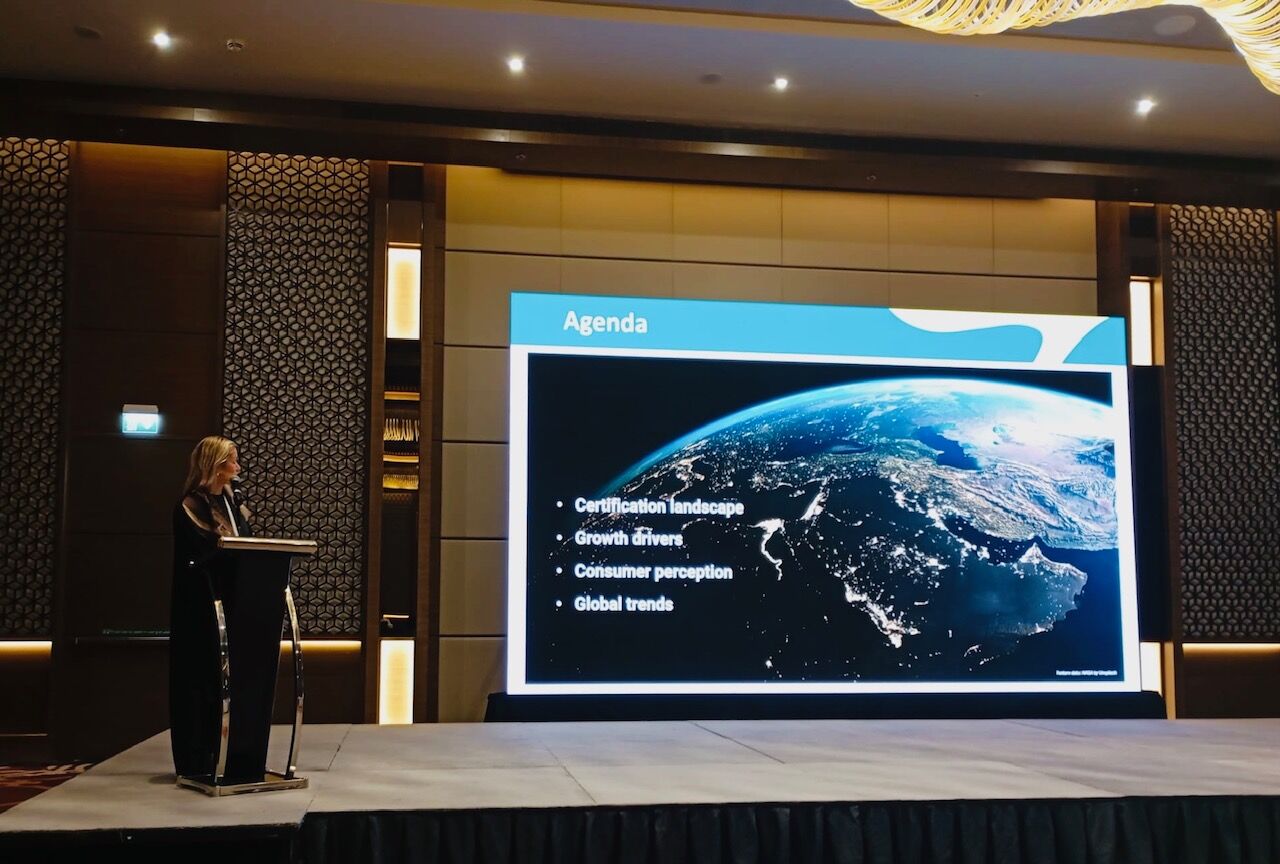
In Riyadh, the Workshop on Aquaculture Certification and Labelling offered a timely reminder of the growing importance of certification in shaping the future of aquaculture. This momentum reflects a broader vision set by the General Fisheries Commission for the Mediterranean (GFCM) , whose 2030 Strategy positions certification as a key lever for strengthening sustainability, resilience, and the public perception of the sector. Organized by the Ministry of Environment, Water and Agriculture of the Kingdom of Saudi Arabia and GFCM, the workshop connected strategy and practice of the responsible aquaculture, turning global commitments into shared regional action.
With more than 60 participants attending in person and over 120 joining online from across the region, the workshop served as a platform for dialogue, knowledge exchange, and regional collaboration. Discussions focused on harmonizing standards, strengthening capacity, and supporting aquaculture producers in implementing transparent and credible certification frameworks.
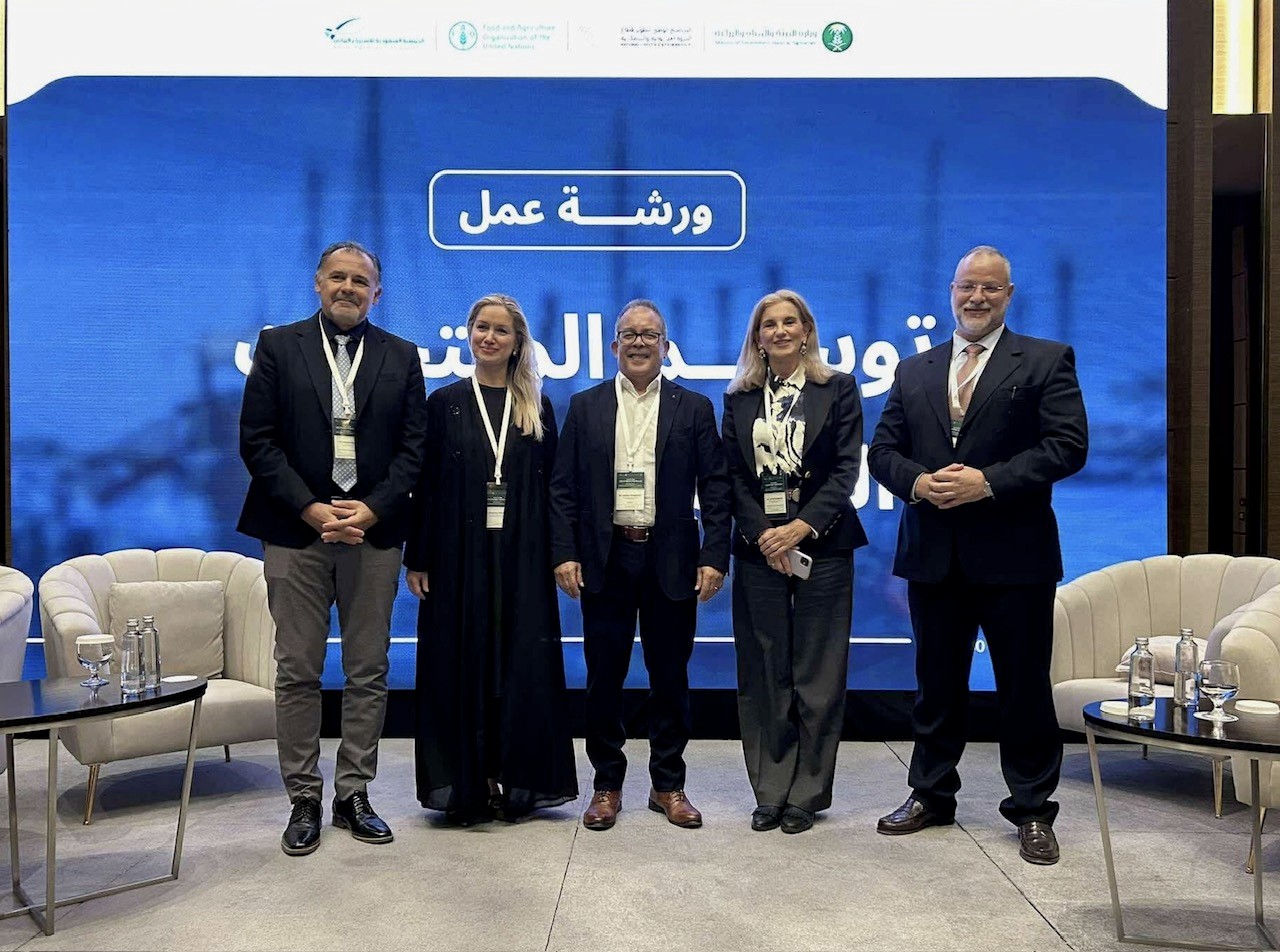
Photo: Speakers at the Workshop on Aquaculture Certification and Labelling: Marcos Moya (ASC), Ekaterina Tribilustova, Lahsen Ababouch (Fisheries and Aquaculture Expert GFCM), Ismini Bogdanous (HAPO), Philippos Pagapeorgiu (Senior Aquaculture and Fisheries Industry Consultant GFCM).
2. Global trends shaping certification and labelling
Over the past decade, certification in aquaculture has shifted from a niche practice to a rapidly expanding global trend. Between 2014 and 2024, production from farms operating under leading certification schemes increased four- to fivefold, reflecting growing demand for verified and responsibly produced seafood.
This growth is driven by several converging factors:
Expanding regulatory frameworks aligning environmental and social standards,
Increasing corporate accountability requirements, and
Rising expectations from consumers and retailers.
Large retail chains and corporate sustainability policies are playing a particularly important role in accelerating certification uptake. At the same time, innovations in technology and marketing are transforming how certified products are verified and communicated to consumers.
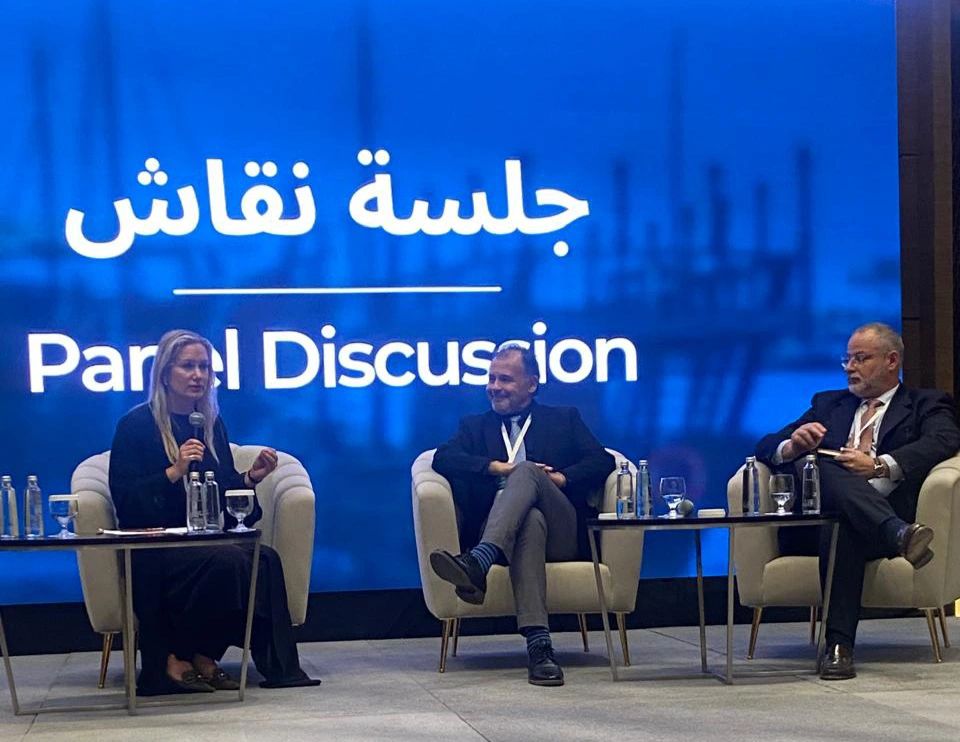
Photo: Panel debates: aquaculture certification and markets
3. Saudi Arabia’s role in advancing sustainable aquaculture
Saudi Arabia demonstrated not only strong national expertise but also an emerging regional leadership role in advancing aquaculture certification systems. A national initiative from Saudi Arabia was highlighted through the SAMAQ (Saudi Arabian Mark of Aquaculture Quality) certification scheme, developed under the guidance of MEWA and implemented by the Saudi Aquaculture Society.
The scheme now covers more than 95% of the country’s aquaculture production, reflecting its wide adoption across the sector. It also reflected Saudi Arabia’s broader ambition to reach 600,000 tonnes of aquatic production by 2030, with significant growth in aquaculture. It was recognized as a strong example of adaptive management and responsible investment, demonstrating how national certification can enhance market recognition and build consumer confidence.
4. From policy to practice: engaging consumers and markets
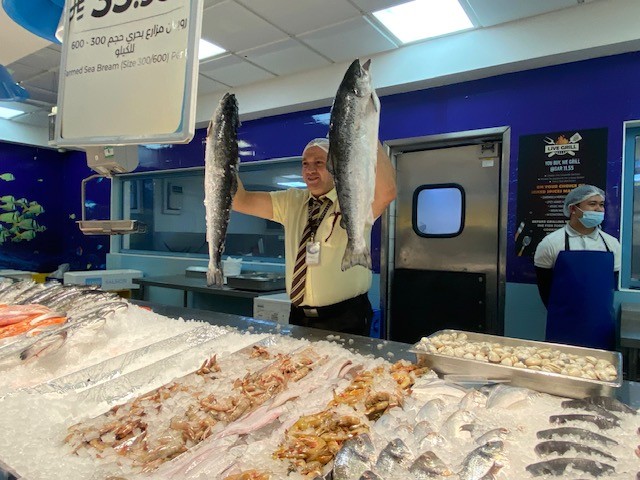
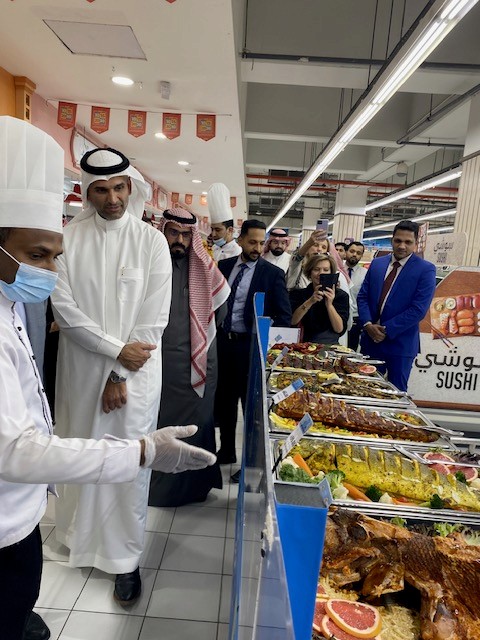
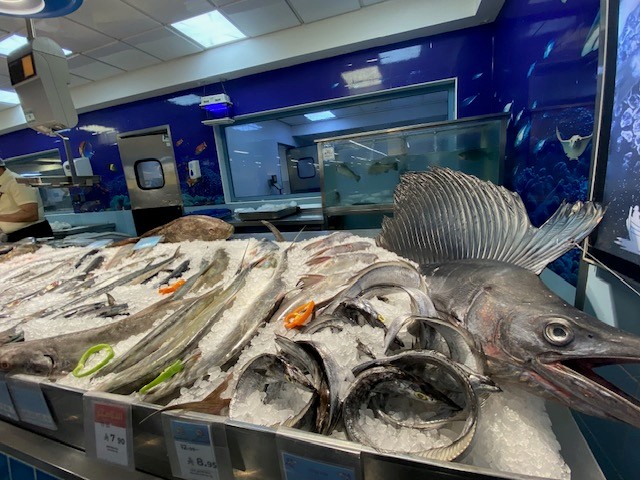
A field visit to a major retail chain and its headquarters in Riyadh provided a fascinating perspective on how certification and labelling translate into consumer engagement. The visit showcased an annual fish promotion festival designed to increase national consumption of fish and seafood products. The event featured:
Cooking demonstrations
Educational outreach activities
Promotion of certified products
This initiative highlighted the importance of public–private partnerships in shaping consumer behavior and promoting sustainably produced aquatic foods.
Photo: Opening of seafood festival at Lulu hypermarket chain and official delegation led by MEWA
5. Looking ahead: opportunities and remaining challenges
While certification and labelling are becoming central tools in aquaculture governance, several challenges remain.
These include:
Limited consumer awareness and understanding of certification schemes,
The complexity of navigating multiple standards and labels, and
The need to ensure accessibility for producers of different scales.
Looking ahead, strengthening communication, improving harmonization of standards, and fostering collaboration across the value chain will be key to ensuring that certification delivers on its full potential.
Ultimately, certification and labelling are not just technical tools—they are essential mechanisms for building trust, supporting informed choices, and guiding aquaculture towards a more sustainable future.
More to Discover

Navigating Sustainability: Certification and Labelling in Responsible Aquaculture
As sustainability moves to the forefront in the global seafood industry, certification and labelling are emerging as key tools to connect producers, markets, and consumers through transparency and trust.
Insights
Apr 20, 2026
1. Bringing certification to the forefront: a regional dialogue
In Riyadh, the Workshop on Aquaculture Certification and Labelling offered a timely reminder of the growing importance of certification in shaping the future of aquaculture. This momentum reflects a broader vision set by the General Fisheries Commission for the Mediterranean (GFCM) , whose 2030 Strategy positions certification as a key lever for strengthening sustainability, resilience, and the public perception of the sector. Organized by the Ministry of Environment, Water and Agriculture of the Kingdom of Saudi Arabia and GFCM, the workshop connected strategy and practice of the responsible aquaculture, turning global commitments into shared regional action.
With more than 60 participants attending in person and over 120 joining online from across the region, the workshop served as a platform for dialogue, knowledge exchange, and regional collaboration. Discussions focused on harmonizing standards, strengthening capacity, and supporting aquaculture producers in implementing transparent and credible certification frameworks.
Photo: Speakers at the Workshop on Aquaculture Certification and Labelling: Marcos Moya (ASC), Ekaterina Tribilustova, Lahsen Ababouch (Fisheries and Aquaculture Expert GFCM), Ismini Bogdanous (HAPO), Philippos Pagapeorgiu (Senior Aquaculture and Fisheries Industry Consultant GFCM).
2. Global trends shaping certification and labelling
Over the past decade, certification in aquaculture has shifted from a niche practice to a rapidly expanding global trend. Between 2014 and 2024, production from farms operating under leading certification schemes increased four- to fivefold, reflecting growing demand for verified and responsibly produced seafood.
This growth is driven by several converging factors:
Expanding regulatory frameworks aligning environmental and social standards,
Increasing corporate accountability requirements, and
Rising expectations from consumers and retailers.
Large retail chains and corporate sustainability policies are playing a particularly important role in accelerating certification uptake. At the same time, innovations in technology and marketing are transforming how certified products are verified and communicated to consumers.
Photo: Panel debates: aquaculture certification and markets
3. Saudi Arabia’s role in advancing sustainable aquaculture
Saudi Arabia demonstrated not only strong national expertise but also an emerging regional leadership role in advancing aquaculture certification systems. A national initiative from Saudi Arabia was highlighted through the SAMAQ (Saudi Arabian Mark of Aquaculture Quality) certification scheme, developed under the guidance of MEWA and implemented by the Saudi Aquaculture Society.
The scheme now covers more than 95% of the country’s aquaculture production, reflecting its wide adoption across the sector. It also reflected Saudi Arabia’s broader ambition to reach 600,000 tonnes of aquatic production by 2030, with significant growth in aquaculture. It was recognized as a strong example of adaptive management and responsible investment, demonstrating how national certification can enhance market recognition and build consumer confidence.
4. From policy to practice: engaging consumers and markets
A field visit to a major retail chain and its headquarters in Riyadh provided a fascinating perspective on how certification and labelling translate into consumer engagement. The visit showcased an annual fish promotion festival designed to increase national consumption of fish and seafood products. The event featured:
Cooking demonstrations
Educational outreach activities
Promotion of certified products
This initiative highlighted the importance of public–private partnerships in shaping consumer behavior and promoting sustainably produced aquatic foods.
Photo: Opening of seafood festival at Lulu hypermarket chain and official delegation led by MEWA
5. Looking ahead: opportunities and remaining challenges
While certification and labelling are becoming central tools in aquaculture governance, several challenges remain.
These include:
Limited consumer awareness and understanding of certification schemes,
The complexity of navigating multiple standards and labels, and
The need to ensure accessibility for producers of different scales.
Looking ahead, strengthening communication, improving harmonization of standards, and fostering collaboration across the value chain will be key to ensuring that certification delivers on its full potential.
Ultimately, certification and labelling are not just technical tools—they are essential mechanisms for building trust, supporting informed choices, and guiding aquaculture towards a more sustainable future.
More to Discover
Navigating Sustainability: Certification and Labelling in Responsible Aquaculture
As sustainability moves to the forefront in the global seafood industry, certification and labelling are emerging as key tools to connect producers, markets, and consumers through transparency and trust.
Insights
Apr 20, 2026
1. Bringing certification to the forefront: a regional dialogue
In Riyadh, the Workshop on Aquaculture Certification and Labelling offered a timely reminder of the growing importance of certification in shaping the future of aquaculture. This momentum reflects a broader vision set by the General Fisheries Commission for the Mediterranean (GFCM) , whose 2030 Strategy positions certification as a key lever for strengthening sustainability, resilience, and the public perception of the sector. Organized by the Ministry of Environment, Water and Agriculture of the Kingdom of Saudi Arabia and GFCM, the workshop connected strategy and practice of the responsible aquaculture, turning global commitments into shared regional action.
With more than 60 participants attending in person and over 120 joining online from across the region, the workshop served as a platform for dialogue, knowledge exchange, and regional collaboration. Discussions focused on harmonizing standards, strengthening capacity, and supporting aquaculture producers in implementing transparent and credible certification frameworks.
Photo: Speakers at the Workshop on Aquaculture Certification and Labelling: Marcos Moya (ASC), Ekaterina Tribilustova, Lahsen Ababouch (Fisheries and Aquaculture Expert GFCM), Ismini Bogdanous (HAPO), Philippos Pagapeorgiu (Senior Aquaculture and Fisheries Industry Consultant GFCM).
2. Global trends shaping certification and labelling
Over the past decade, certification in aquaculture has shifted from a niche practice to a rapidly expanding global trend. Between 2014 and 2024, production from farms operating under leading certification schemes increased four- to fivefold, reflecting growing demand for verified and responsibly produced seafood.
This growth is driven by several converging factors:
Expanding regulatory frameworks aligning environmental and social standards,
Increasing corporate accountability requirements, and
Rising expectations from consumers and retailers.
Large retail chains and corporate sustainability policies are playing a particularly important role in accelerating certification uptake. At the same time, innovations in technology and marketing are transforming how certified products are verified and communicated to consumers.
Photo: Panel debates: aquaculture certification and markets
3. Saudi Arabia’s role in advancing sustainable aquaculture
Saudi Arabia demonstrated not only strong national expertise but also an emerging regional leadership role in advancing aquaculture certification systems. A national initiative from Saudi Arabia was highlighted through the SAMAQ (Saudi Arabian Mark of Aquaculture Quality) certification scheme, developed under the guidance of MEWA and implemented by the Saudi Aquaculture Society.
The scheme now covers more than 95% of the country’s aquaculture production, reflecting its wide adoption across the sector. It also reflected Saudi Arabia’s broader ambition to reach 600,000 tonnes of aquatic production by 2030, with significant growth in aquaculture. It was recognized as a strong example of adaptive management and responsible investment, demonstrating how national certification can enhance market recognition and build consumer confidence.
4. From policy to practice: engaging consumers and markets
A field visit to a major retail chain and its headquarters in Riyadh provided a fascinating perspective on how certification and labelling translate into consumer engagement. The visit showcased an annual fish promotion festival designed to increase national consumption of fish and seafood products. The event featured:
Cooking demonstrations
Educational outreach activities
Promotion of certified products
This initiative highlighted the importance of public–private partnerships in shaping consumer behavior and promoting sustainably produced aquatic foods.
Photo: Opening of seafood festival at Lulu hypermarket chain and official delegation led by MEWA
5. Looking ahead: opportunities and remaining challenges
While certification and labelling are becoming central tools in aquaculture governance, several challenges remain.
These include:
Limited consumer awareness and understanding of certification schemes,
The complexity of navigating multiple standards and labels, and
The need to ensure accessibility for producers of different scales.
Looking ahead, strengthening communication, improving harmonization of standards, and fostering collaboration across the value chain will be key to ensuring that certification delivers on its full potential.
Ultimately, certification and labelling are not just technical tools—they are essential mechanisms for building trust, supporting informed choices, and guiding aquaculture towards a more sustainable future.